
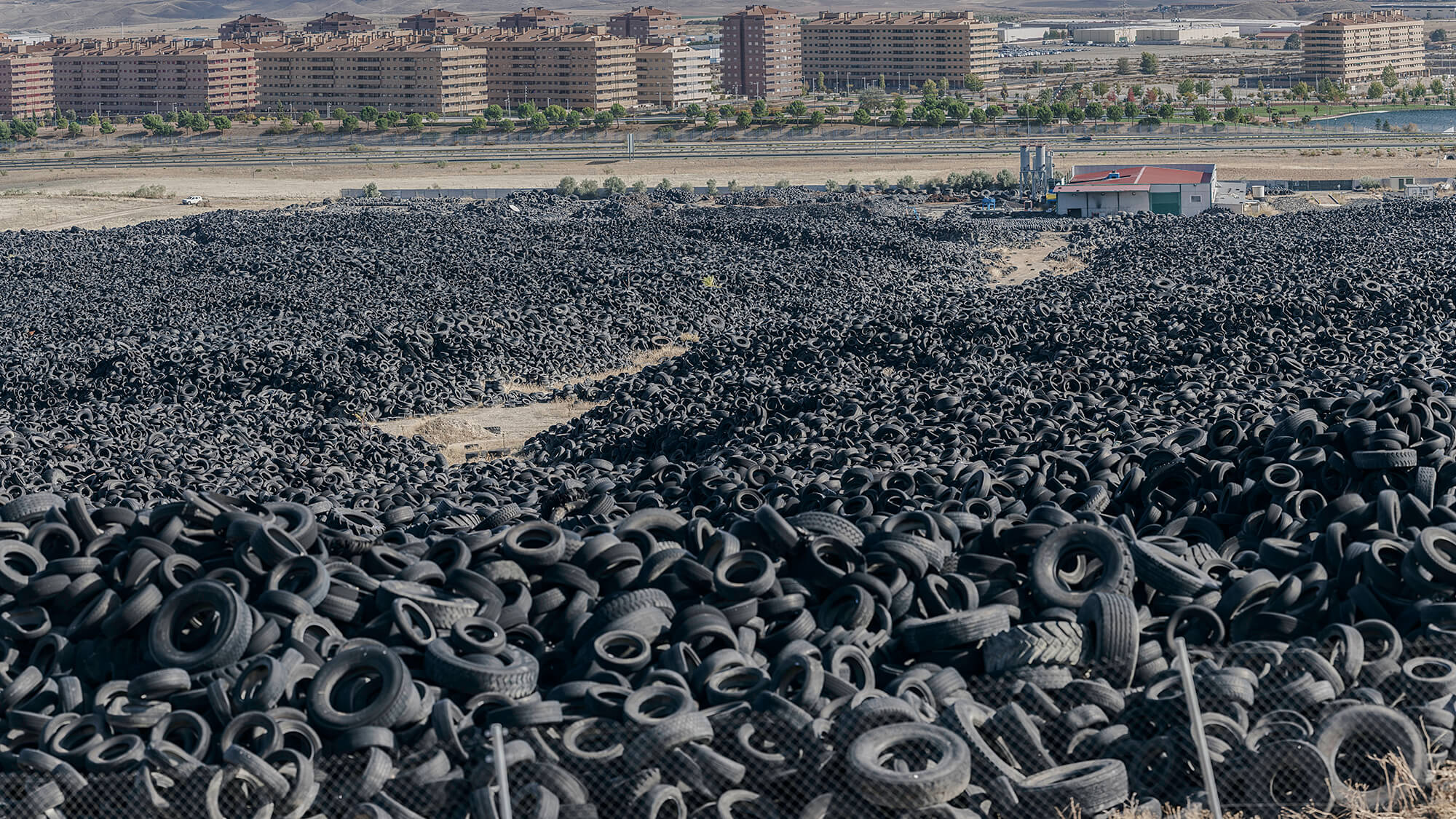
The tyres investigation is one of the clearest examples of how regulatory failure in the UK can fuel environmental destruction and human suffering on a global scale.
For nearly two years, Fighting Dirty worked quietly behind the scenes — gathering whistleblower testimony, collaborating with investigative journalists, and coordinating legal pressure — to expose a system that allowed British waste tyres to be exported into criminal networks operating illegal pyrolysis plants in India.
This case wasn’t just about tyres. It was about organised crime, regulatory negligence, and a recycling industry structured in a way that made exploitation inevitable.
“Organised crime is making a fortune illegally exporting waste tyres to India… supported by UK companies that charge customers a £5 ‘recycling’ levy per tyre. Instead, those companies pocket the levy and the tyres are burned resulting in massive suffering and pollution.”— Georgia Elliott-Smith
How the Case Began: A Cry for Help From Inside the Tyre Industry
The origins of the case go back to 2019, when a UK rubber recycler contacted George Monbiot with evidence that legitimate British recycling businesses were being driven to bankruptcy.
Their problem? A sudden, massive redirection of waste tyres away from domestic recyclers and into cheap, illegal export.
Linking up with SourceMaterial, an investigative journalism group, we discovered that 55 million waste tyres per year were being shipped from the UK to India, taking advantage of massive loopholes in the law and the negligence of regulators failing to conduct checks of paperwork, shipping consignments and operator sites.
For ten years, the recycling industry had been begging the government to act, armed with compelling evidence of rampant criminality, but they were ignored. Unable to compete with dirt cheap exports, many British recycling businesses were forced to close their gates for good.
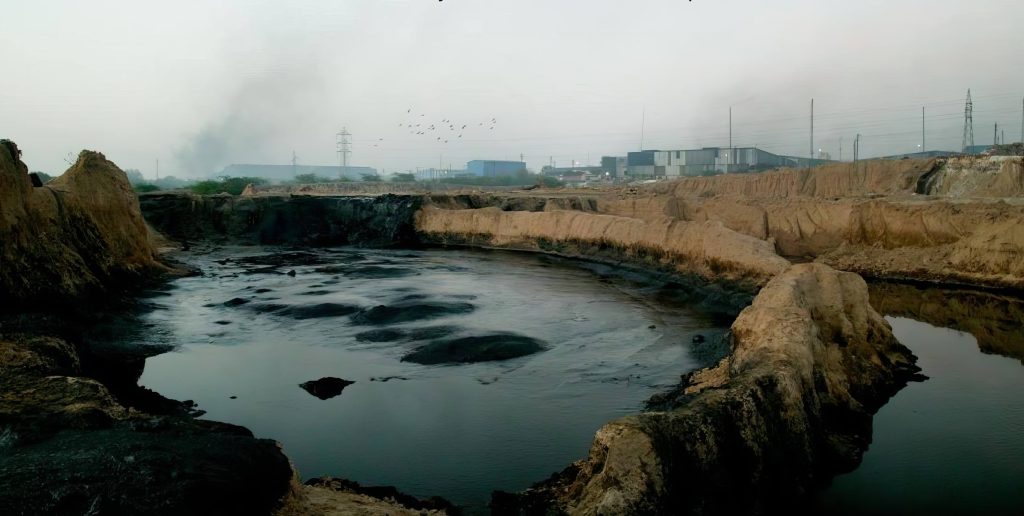
Illegal Pyrolysis: What Really Happens Overseas
To understand the scale of the problem, you need to understand pyrolysis.
- It is marketed as a “green” way to break tyres down into oil, gas, carbon black and steel.
- In reality, many pyrolysis plants — particularly those operating illegally — are filthy, unregulated and dangerous.
Workers, often children, are exposed to:
- toxic fumes,
- concentrated carcinogens,
- open burning,
- uncontrolled releases of black smoke,
- frequent accidents such as explosions,
- and contaminated water supplies.
It’s a horrific abuse of human rights, causing real suffering and death in those communities.
This is our waste that’s causing it. But UK consumers are being tricked – when our tyres are replaced, we are charged a ‘recycling levy’ of about £5 per tyre. This should be used for responsible recycling but instead companies are pocketing the cash and selling waste tyres to the lowest bidder. With a total lack of regulatory oversight, the door is wide open to criminals.
The Regulatory Failure: A Door Left Wide Open
The Environment Agency (EA) is supposed to enforce the rules around waste exports.
Despite being presented with evidence that waste brokers were openly flouting the rules and 55 million waste tyres per year were being exported from the UK to illegal pyrolysis plants in India, the EA chose to ignore it.
We unearthed evidence of a systemic, long-term failure inside the EA:
- Tyres were being collected and exported with almost no scrutiny.
- Data discrepancies went unchecked.
- Waste brokers were able to operate with minimal oversight.
- Warnings from industry insiders were repeatedly ignored.
As the case grew, it became clear this wasn’t an isolated lapse — it was a structural failure. From our correspondence, we discovered that the EA didn’t understand their legal obligations to prevent the illegal trade.
Fighting Dirty’s Strategy: The “Pincer Manoeuvre”
We spent almost two years building a watertight case and coordinated a ‘pincer manoeuvre’ that forced the government to act. This included:
- Legal correspondence between our lawyers and the government,
- Cooperation with investigative journalists at SourceMaterial,
- Working closely with industry insiders,
- Contributing to and coordinating with BBC File on Four, and
- Engagement with Parliamentary committees.
We timed our correspondence perfectly, ensuring that the EA couldn’t brush us away. The combination of massive media attention and formal legal action created a perfect storm.
Exposing the Scale of the Crime: BBC Broadcast + Legal Action
In February 2025, having collated enough evidence of regulatory failings, Fighting Dirty’s lawyers, Leigh Day, write to the EA to formally begin court proceedings. The EA had four weeks to respond. With the BBC documentary due to be aired in March, we knew they had nowhere to hide!
On 25th March, the BBC File on Four documentary was broadcast drawing massive international attention. Fighting Dirty was named in Parliamentary questions as MPs quizzed the Environment Sectretary on the scandal and demanded urgent action.
The following day, our lawyers received a response from the EA who requested a pause of legal proceedings while they conducted an internal review.
A few weeks later, Defra announced the end of a controversial exemption that allowed rogue operators to dodge the waste rules. In July, the EA issued a report admitting to massive failings and announcing a new set of regulations designed to clamp down on illegal exports.
For now, Fighting Dirty has paused legal proceedings while the EA implements their new regime. We hope that the new regulations prevent illegal exports and allow the UK recycling industry to flourish.
But, if the EA prove ineffective, we may still proceed to court in 2026. Watch this space!
Parliament Takes Notice: Evidence Submitted to the House of Lords
The tyres case didn’t end with media exposure — it contributed to a national political reckoning.
Georgia gave evidence to the House of Lords Waste Crimes Inquiry, which later issued a devastating assessment of how the EA had handled waste crime:
“It is our considered view that waste crime is critically under-prioritised despite its significant environmental, economic and social costs. We are deeply concerned about the demonstrable inadequacy of the current approach to tackling waste crime.”— Baroness Sheehan, Chair of the Environment and Climate Change Committee
This recognition confirmed what Fighting Dirty had demonstrated across two years of work: that the regulator is failing, and the consequences are global.
Where the Case Stands Now
While the major revelations have already been published, the tyres case is not fully concluded.
Currently, we are:
- continuing to monitor industry insiders’ reports,
- working with journalists,
- preparing potential legal follow-ups,
- and supporting Parliamentary scrutiny.
Most importantly, the case has become a proof of concept:
- Fighting Dirty’s model works.
- Evidence + legal pressure + journalism can expose and disrupt organised environmental crime.
- Regulators can be forced to acknowledge their failures.
Why This Case Matters
The tyres scandal exposed a fundamental truth:
Environmental crime is not a series of isolated bad actors. It is a system that thrives when regulators fail.
By revealing how UK waste fed illegal burning abroad, the case showed:
- Britain’s environmental responsibilities don’t end at its borders.
- Loopholes in enforcement create global harm.
- Communities overseas bear the cost of domestic regulatory neglect.
- Citizen-led litigation can challenge this — even when others won’t.
Our work continues, spread across several fronts from PFAS chemicals, to landfill leachate, and sewage sludge.
This Case Isn’t Over: It’s Paused
If the Environment Agency fails to deliver on its promises, Fighting Dirty may take them to court in 2026. That means legal preparation, monitoring, evidence-gathering and pressure — long before the headlines return.
The tyres case proves that a small organisation, armed with evidence, lawyers and journalists, can force the government to act — even against organised environmental crime.
That work only happens with public support.
Donate to Fighting Dirty and help us apply pressure where it actually works.